

As someone who experiences regular power outages due to storms and random occurrences, I’ve learned that having a backup plan for electric outages is essential for my home. While you can always use a gasoline- or propane-powered generator, a battery system can be a renewable, zero-emissions way to provide your home with an efficient backup solution.
Also: The best portable power stations you can buy
A set of backup batteries can offer a long-term solution to power outages, especially as you can connect your battery storage system to a solar panel system.
Best generators deals of the week
Deals are selected by the CNET Group commerce team, and may be unrelated to this article.
What is the best home battery and backup system right now?
Our top pick for the best home battery and backup system is the Tesla Powerall 3 due to its 10-year warranty, great power distribution, and energy capacity of 13.5kWh. However, the Tesla Powerall 3 is quite expensive, and different systems may better suit your needs, so we’ve included a variety of picks to fit all types of needs and budgets.
The best home battery and backup systems of 2026
Show less
Why we like it: The Tesla Powerwall is a leading battery backup system that simplifies your switch to backup battery power. It can be recharged using solar panels, so you can rely on stored solar energy during power outages.
The Powerwall 3 has an energy capacity of 13.5 kWh and can deliver continuous power of 11.5 kW. It has a 10-year guarantee and can be monitored and managed through its app. You can order a Tesla Powerwall directly from Tesla or through certified installers without buying Tesla solar panels.
Also: The best home EV chargers you can buy, according to experts
Who it’s for: You can connect up to 4 Powerwall 3 to ensure you have the right-sized backup batteries for your home. For optimal results, it’s best to use the Tesla Powerwall with a solar panel system, especially if you’d like to go off the grid or save some money on your utility bills. Additionally, you can recoup up to 30% of the cost of installing a solar power system with a 2024 solar tax credit.
Who should look elsewhere: The Tesla Powerwall is by far the most expensive choice on the market. So if you’re looking for something a bit more manageable, there are plenty of options to choose from with brands like Anker.
Tesla Powerwall 3 features: Estimated cost per kWh: About $680-$700 | Capacity: 13.5kWh | Battery type: Lithium-iron phosphate (LFP) | Scalability: Up to 4 units | IP Rating: IP67
Read More
Show Expert Take Show less
Show less
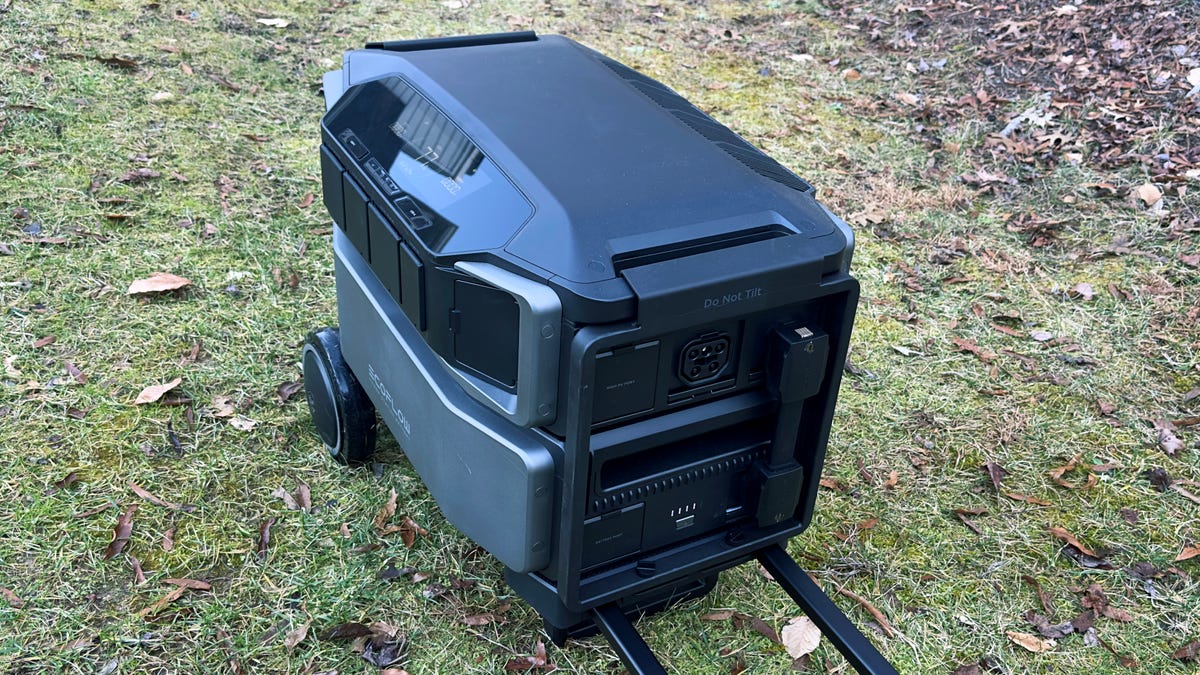
Why we like it: The Delta Pro Ultra is EcoFlow’s latest portable battery unit. Its true beauty lies in combination with the new EcoFlow Smart Home Panel 2 to become a seamless whole-home backup solution. The DPU is a combination inverter and battery, and the system is expandable from 6kWh to 90kWh capacity. Each Smart Home Panel 2 can support up to three inverters, and each inverter can handle up to five stackable batteries.
Even without the expanded storage capacity, a single EcoFlow DPU can provide essential power for a home for up to two days. I went hands-on with the DPU and Smart Home Panel 2 and found that it provides a seamless transfer from the grid to backup power in case of a power outage.
Review: EcoFlow Delta Pro Ultra & Smart Home Panel 2
One of the outages I experienced with the EcoFlow Delta Pro Ultra and Smart Home Panel 2 happened during this past winter’s coldest weeks. This home battery backup system gave my family the power to eat warm meals and stay warm through the night. My young kids also slept with their night lights and sound machines while we charged essential devices.
Who it’s for: The Delta Pro Ultra is also portable and can be transported to campsites, with an RV, or remote locations. Its LFP battery means you can even bring it inside to run appliances or charge devices in a pinch without worrying about emissions. However, one Reddit user who purchased the DPU said the solar aspect is good enough for top-off but not enough to be 100% off-grid reliant.
Who should look elsewhere: The EcoFlow Delta Pro Ultra can be used on its own, but you have to buy the Smart Home Panel 2 for whole-home energy. So if you’re looking for an all-inclusive option, brands like Tesla and Anker have you covered.
EcoFlow Delta Pro Ultra + Smart home panel 2 features: Estimated cost per kWh: About $750 | Capacity: 13.5kWh | Battery type: Lithium-iron phosphate (LFP) | Scalability: Up to 5 batteries per inverter and up to 3 inverters per panel | IP Rating: IP65
Read More
Show Expert Take Show less
Show less
Why we like it: The Anker Solix X1 is a newer home backup system with a permanent solution and modular installation. Its energy capacity ranges from 5 kWh to 180 kWh, while its power output goes from 3 kW to 36 kW. The X1’s modular design allows consumers to add a specific number of modules to meet their needs.
With Lithium Iron Phosphate (LFP) batteries, the Anker Solix X1 is built for a long lifespan and different weather conditions. It can operate from -4°F to 131°F and boasts an IP65 rating, making it a good candidate for outdoor installations.
Also: Not into the Tesla Powerwall? You can now buy the Anker Solix X1
Who it’s for: The estimated cost for a 15 kWh Anker Solix X1 configuration is around $10,000. Similar to the Tesla Powerwall+, this cost can go up to tens of thousands of dollars, especially with the addition of installation fees. The Anker Solix X1 is estimated to cost about $650 per kWh before installation costs. This makes it a great option for going modular as your power needs change with your home.
Who should look elsewhere: While the modular design is great for expanding your energy capacity, it can also get quite expensive. If you need a set-and-forget solution, other brands like Tesla and EcoFlow have high-capacity options that don’t need additional equipment down the line.
Anker Solix X1 features: Estimated cost per kWh: About $650 | Capacity: 5 kWh | Battery type: Lithium-iron phosphate (LFP) | Scalability: Up to 180 kWh | IP Rating: IP65
Read More
Show Expert Take Show less
Show less
Why we like it: The Enphase IQ Battery 10T offers a high-energy capacity of 10.5 kWh and delivers 5.76 kVA at peak output. It consists of three base Encharge 3T storage units, which use Lithium Ferrous Phosphate (LFP) batteries with a power rating of 3.84KW.
This battery storage system cools passively, with no moving parts or fans, ensuring silent operation. Additionally, it comes with a 15-year limited warranty and a mobile app that allows for easy monitoring and control. Professional installation is necessary for this battery storage system.
Who it’s for: Customers who have purchased and installed the Enphase IQ Battery 10T caution other buyers to check the exact dimensions of the units they’re considering to see if they’ll fit in their homes. Enphase partnered with several battery cell suppliers to help prevent supply chain disruptions, so the 10T may be available in different sizes.
Who should look elsewhere: The Enphase IQ is by far the trickiest model to source on this list, with customers sometimes being unable to find a unit that will fit in their homes. Brands like Tesla offer standardized unit sizes for more peace of mind when installing while Anker and EcoFlow provide modular systems for energy setups tailor-made for your home.
Enphase IQ Battery 10T features: Estimated cost per kWh: About $800 | Capacity: 10 kWh | Battery type: Lithium-iron phosphate (LFP) | Scalability: Modular through installers | IP Rating: IP67
Read More
Show Expert Take Show less
Show less
Why we like it: The EcoFlow Stream series has a semi-permanent installation design that’s great for renters who want peace of mind and security during outages or lower electric bills. The Stream Ultra battery provides up to 1.92kWh of energy, and with modular connectivity, you can set up multiple batteries for up to 11.52kWh.
Read more: EcoFlow’s new backyard solar energy system starts at $599 – no installation crews or permits needed
Who it’s for: The optional solar panels feature flexible installation clips that allow you to place them just about anywhere to get the best sun exposure to charge and power your system. And with plug-and-play power, you don’t need to set up a complicated panel; just plug the unit into a standard wall outlet. This is perfect for renters who need permission from lease holders and landlords to make permanent upgrades to the space.
Who should look elsewhere: While the EcoFlow Stream is great for DIY enthusiasts who are confident with their ability to add a battery backup system to their home on their own, if you’re less than optimistic that you have the know-how, EcoFlow has professional installation options for other systems.
EcoFlow Stream Series features: Estimated cost per kWh: About $800 | Capacity: 1.92 – 11.52 kWh | Battery type: Lithium-iron phosphate (LFP) | Scalability: Modular through installers | IP Rating: IP67
Read More
Show Expert Take Show less
The Tesla Powerwall 3 is the best whole-home battery backup system option. With a capacity of 13.5kWh, it offers plenty of energy storage to get you through power outages. The 10-year warranty also provides peace of mind that the product is built to last.
The companion app is user-friendly and allows easy monitoring and management of energy distribution and usage. Plus, the ability to connect up to four Powerwall 3 units makes it a highly adaptable choice for changing energy needs.
| Home battery | Estimated price (before installation) | Warranty | Capacity | Output |
| Tesla Powerwall 3 | $12,000 | 10 years | 13.5 kWh | 11.5 kW |
| EcoFlow DPU + Smart Home Panel 2 | $4,100 | 5 years | 6 kWh | 7.2 kW |
| Anker Solix X1 | $9,000 | 10 years | 3 kWh | 5 kW |
| EcoFlow Stream System | $1,199 | 10 years | 1.92 – 11.52 kWh | 1200W |
| Enphase IQ Battery 10T | $1,200 | 15 years | 10 kWh | 3.8 kW |
Note: Prices are approximate and may vary depending on location, installation, and other factors.
You’ll need to determine the wattage and voltage consumption of your entire household. Thankfully, Lowe’s has a handy worksheet to help you figure out your power needs. Once you know how many watts and volts your appliances use, you’ll want to add at least 20% to the total; that way, if you add electronics or appliances or something that starts to draw more power than usual, your system will be able to keep up.
And if retail and installation pricing seems a bit steep, many places offer some payment plan so you can break the final cost into more affordable monthly payments.
| Buy this home battery backup… | If you need… |
| Tesla Powerwall+ | A well-rounded and expandable home battery backup |
| EcoFlow DPU + Smart Home Panel 2 | A portable battery that can function as your whole-home backup solution |
| Anker Solix X1 | A home backup system with a modular installation |
| EcoFlow Stream System | A backup system that doesn’t require permanent installation |
| Enphase IQ | A compact battery backup system for smaller homes |
Latest news on home battery backup systems
- Whole-home battery backup systems have become more and more popular in recent years as homeowners look for energy solutions to help keep their homes powered up during emergencies and natural disasters as well as for more self-sufficient electricity.
When choosing which home battery backup systems to include, we considered the following key factors:
- Technical Specifications: We considered technical factors such as peak, start, running voltage, and amperage. These permanent installations must be capable of handling the electrical load of all the appliances in the house daily.
- Capacity and Power: When choosing a system, consider your home’s current capacity and power to determine the appropriate battery backup system you will need. Choosing a system with inadequate capacity can cause electrical wiring problems. Selecting a system with excess capacity ensures smooth operation and allows for future expansion as power needs change.
- Cost: Battery backup systems can be quite expensive, so it is important to consider pricing and installation costs. We compared different options to ensure you were getting the best value for your investment.
- Reliability: Aside from personal experience, we researched customer reviews, performance track records, and overall reputations of manufacturers to determine the reputation and reliability of the brands offering home battery backup systems.
While researching and testing each home battery backup system on this list, I and other ZDNET experts kept these criteria in mind:
- Scalability: No two households will have the same power needs. Each system on this list has been verified to allow for some degree of unit stacking and system scalability, allowing customers to create custom, off-grid power solutions.
- Tax incentives: Local, state, and federal policies may offer some form of tax rebate or incentive for installing a solar-powered battery backup system. These help reduce the purchase and installation costs of larger, more advanced systems.
- Auxiliary power: Some systems allow you to set up a smaller standby power storage unit to help provide energy for essentials in case of an emergency or system failure.
Home batteries store energy generated by your solar panels or from the grid during off-peak hours, so you can use it later when energy prices are higher or during power outages. They typically use Lithium-ion batteries, which are more efficient and durable than other battery technologies.
While solar panels can generate energy during the day, they don’t produce electricity at night or during cloudy weather, making using energy stored in batteries necessary. Additionally, batteries allow you to be more independent from the grid, saving money and increasing your home’s energy security.
Backup battery systems are generally charged by utility grid electricity or solar power. If you live in an area where you get great levels of sunshine, then consider using solar power to charge your batteries up during the day.
Also: The 5 best solar chargers
Alternatively, if your power outages are infrequent, then consider topping up the batteries using electricity when the cost is low.
To ensure that your battery system can meet your power needs, you should first check the capacity of the batteries. This capacity is typically measured in kilowatt-hours (KWh). Additionally, you should measure the surge current requirements of the devices you want to power, especially if you plan to start a motor, such as a sump pump. Keep in mind that powering high-demand devices like pool filters or air conditioning units for extended periods may not be feasible with a battery system.
Cost is also an important factor to consider when designing a battery system. If your power requirements exceed 15KWh of inverter power or 30KWh per day for your batteries, the cost of the system may become prohibitive. It’s also important to take into account potential inefficiencies, voltage drops, and other losses to ensure that your system can handle any situation that may arise. By considering all of these factors, you can design a battery system that meets your needs while staying within your budget.
When calculating the size of battery power you need, you will need to carefully consider peak load in KWh per day. If your energy requirements — such as lighting — are low, most backup systems will be able to cope with this. However, if you need to run items like sump pumps, air conditioning, or heavy start-load items, you’ll also need to consider peak loads.
Latest updates
- January 2026: The best list was updated to align with ZDNET’s current style guide and editorial guidelines. We also ensured that every home battery backup system on the list was in stock and the latest model available.
Other home batteries to consider
Want to know how we choose which battery backup systems and portable power stations to feature in our best lists? Check out our explainer on how we test portable power generators at ZDNET. And if you need help understanding how to best maintain your new power station, we have a helpful guide on the 12 rules to follow when using and maintaining a power station.
(Except for the headline, this story has not been edited by PostX News and is published from a syndicated feed.)
