

– Advertisement –
Before being connoisseurs of tulips, windmills, bikes, and happy children, the Dutch were seafarers, explorers, and conquerors. Along the way, they named many places.
The Dutch sailing expeditions yielded various outcomes — some marked by tragedy, others by successful discoveries of new trade routes and lands. Naturally, as the first Europeans to arrive in many of these places, the Dutch also took the opportunity to name them.
READ MORE | How the fate of 17 Dutch sailors changed history
So, here are seven well-known places in the world whose names are Dutch, and their stories.👇
1. Tasmania and New Zealand: Searching for gold
Abel Tasman was a 17th-century Dutch explorer and merchant for the VOC. His voyages led him to “discover” four of the lands we know today as Tasmania, New Zealand, Tonga, and Fiji.
In August 1642, the Council of the Indies sent Tasman and Franchoijs Visscher to explore Beach — a mistranslation of Locach, long mistaken for northern Australia and described by Marco Polo as rich in gold. 💰


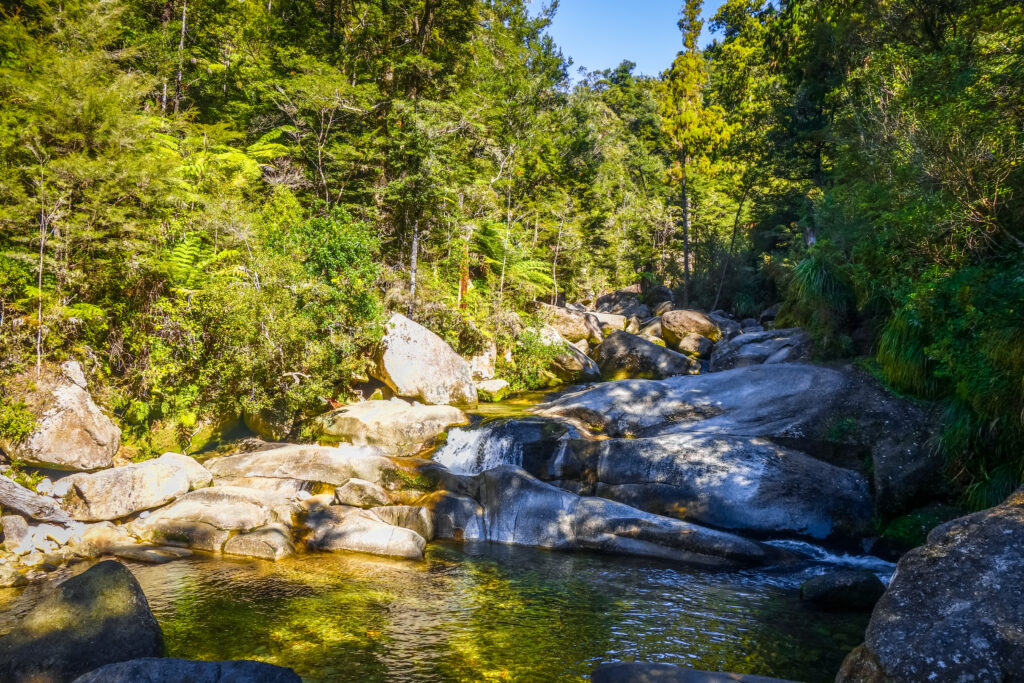

By late November 1642, Tasman spotted a new coast after stopping in Mauritius and being blown northeast by a storm.
In line with tradition, he named it Van Diemen’s Land after his sponsor, Governor-General Antony van Diemen. It was renamed Tasmania on January 1, 1856, in honour of its first European visitor. 👣
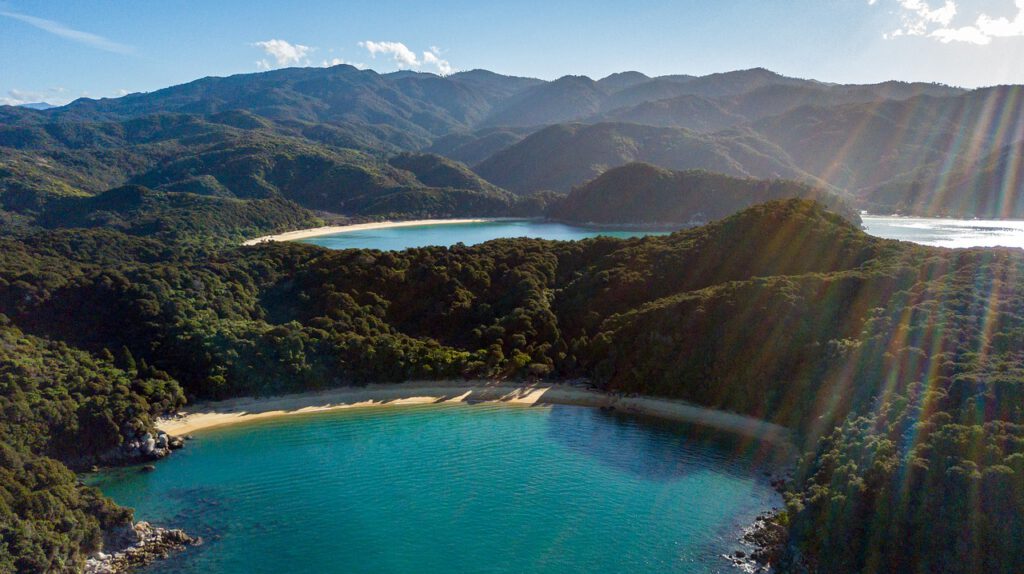

Just 13 days later, Tasman sighted New Zealand. Unfortunately, he was unaware of that — he thought it was connected to Isla de los Estados in Argentina and named it Staten Landt, after the States-General.
In 1645, Dutch cartographers corrected Tasman’s mistake and named the land Nova Zeelandia, after the Dutch province of Zeeland.
READ MORE | New Zealand’s namesake: how the Dutch named NZ
On his return, Tasman and his ships passed through the Tongan archipelago, spotting the Fiji islands, which the explorer named Prince William’s Islands. 🌊

2. Easter Island: A troubled journey
In August 1721, the Dutch West India Company sent explorer Jacob Roggeveen to search for the mythical Terra Australis and explore a westward trade route to the Spice Islands (The Makulu).
Sailing through the South Atlantic into the Pacific, Roggeveen — like many before him — set out for one discovery and found another.
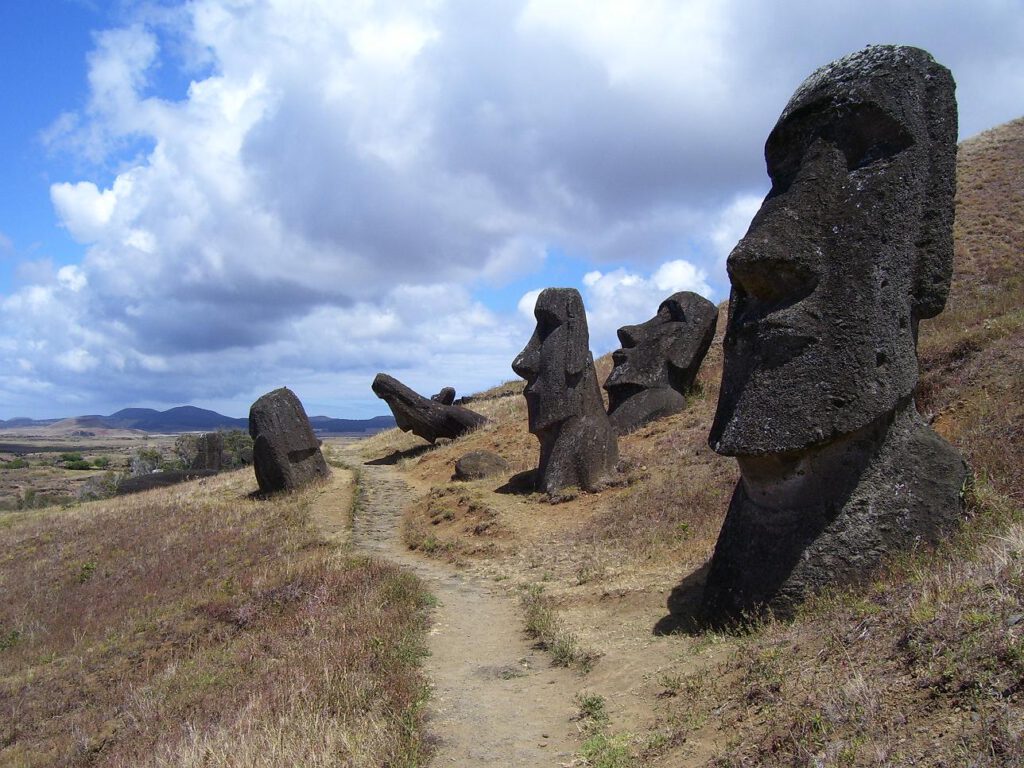
On April 5, 1722, Easter Sunday, he spotted new land and broke with tradition by naming it not after royalty, but the day itself: Easter Island. 🐣

Perhaps he followed the example of British captain William Mynors, who, on Christmas Day 1643, saw an island in the Indian Ocean and named it…you guessed it, Christmas Island.
Roggeveen explored 12 islands, but the journey was rocky: he lost his flagship and clashed violently with some islanders, resulting in deaths.
READ MORE | Islands of the Netherlands: a guide to the Wadden Islands


In the Netherlands, the Dutch East India Company, VOC, arrested him for violating their monopoly and confiscated his remaining ships. He was acquitted and compensated after a lengthy lawsuit.
3. Robben Island: The political prison
Most know about the Dutch colonial roots of Cape Town, founded in 1652 as a VOC trading post.
READ MORE | The Dutch and South Africa: more than just Apartheid and Boers
But just 7 km west lies Robben Island — not named after a person or bird, but the Dutch word robben, meaning seals, which they spotted in abundance. 🦭
Robben Island is perhaps most famous for the political prisoners that were detained there during the nation’s era of Apartheid.
Nelson Mandela, among others, was imprisoned on the island for 18 years before playing a key role in ending apartheid and later winning the Nobel Peace Prize.
Robben Island has held political prisoners since the 16th century, when the VOC used it to imprison leaders from other Dutch colonies.
4. Bluefields, Nicaragua: The Dutch pirate
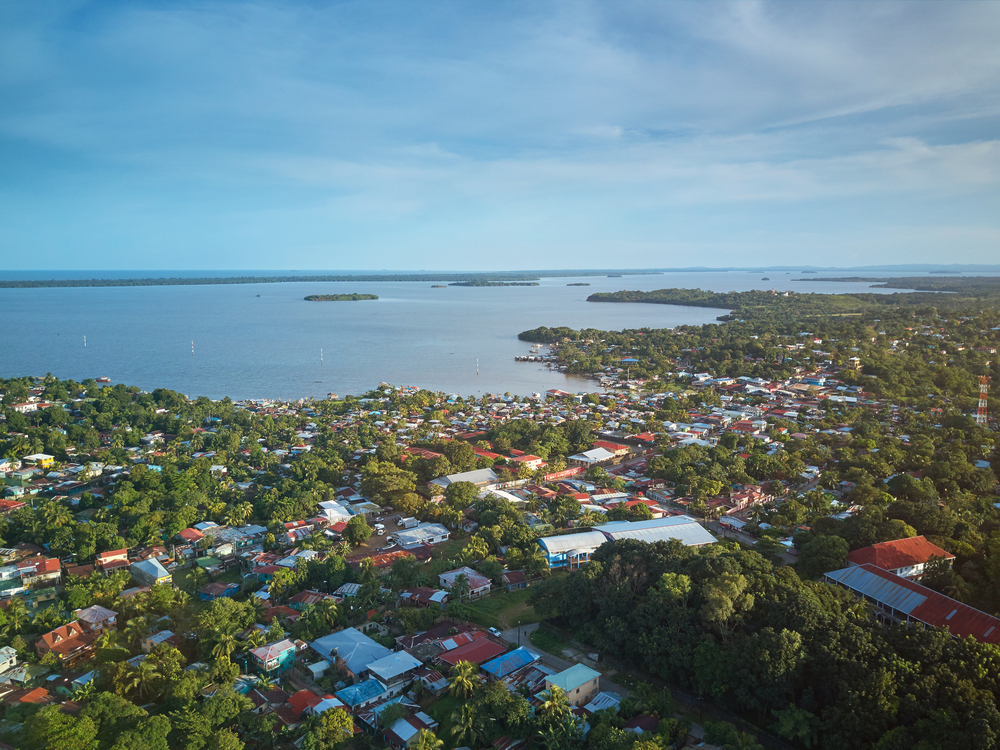
Bluefields, a Nicaraguan municipality at the mouth of the Escondido River, is named after Abraham Blauvelt, a 17th-century Dutch East India Company employee who later turned pirate and used the area as a hiding place.
He was the first European to explore present-day Honduras and Nicaragua and traveled to England seeking support to establish a colony. When these efforts failed, Blauvelt turned privateer, raiding Spanish ships near Jamaica. ⚓
Blauvelt traded his spoils in New Amsterdam (now New York), but he was banished when the colony feared damaging its reputation by dealing with pirates. He fled to Bluefields — and the rest is history.
5. Barents Sea: The unbearable cold
The sea along the northern coasts of Norway and Russia was once known as Murmanskoye morye (Murmansk Sea), which appeared on maps in the 16th and 17th centuries. In the 19th century, it was renamed the Barents Sea in honour of Dutch explorer Willem Barentsz and his Arctic expeditions. ❄️
READ MORE | Australia and the Netherlands: adventures at sea and shared history
Barentsz led three voyages seeking a Northeast Passage— believed to open each June due to melting ice — offering a potential trade route to the Indies.
During the voyages, Barentsz and his crew faced polar bear attacks and harsh weather, with icebergs and frozen seas ending the first two expeditions. As a result, the States-General refused to fund further trips.
Instead, they offered a reward for success. Amsterdam’s Town Council supported a third expedition, sending two ships under Jan Rijp and Jacob van Heemskerk, with Barentsz commanding.
READ MORE | Best beaches in the Netherlands: the ultimate guide to Dutch beaches
The voyage began promisingly: Barentsz discovered Bear Island, Spitsbergen, and several fjords. A split between the captains followed, with Barentsz continuing northeast.
In July, his crew became trapped in ice near Novaya Zemlya and endured a brutal Arctic winter; the following June, they attempted to return. Barentsz died at sea after a week, and the survivors were rescued by a Russian ship seven weeks after that.
The 2011 film “Nova Zembla” by Reinout Oerlemans dramatises the harrowing journey.
6. Mauritius: The abandoned prince
Today’s independent state of Mauritius has a very long colonial history with the Dutch, the French, and the British. There is also strong evidence that the island was known to Arab sailors before the European expeditions.
In the 14th century, Portuguese sailors visited the then uninhabited land, and their cartographers named it Mascarenes — but took no interest in it.
At the end of the 16th century (1598), bad weather whilst passing the Cape of Good Hope changed the route of five Dutch ships, which wound up sailing to the shores of Mauritius.
Under the command of Wybrand van Warwijck, they anchored and named the island Prins Maurits van Nassaueiland, after Prince Maurits of the House of Nassau.
The Dutch settled on Mauritius for their ships passing through this sea route and held it for 20 years. Eventually, though, they abandoned it. 👋
The French took over the island, renaming it the Isle de France and using it, among other things, to raid British commercial ships. That lasted until 1810, when the British took control of the island and returned its Dutch name.
7. In and around New York
Many of today’s American toponyms originated in Dutch because of the first settlers. The Dutch heritage is visible in and around New York (previously known as New Amsterdam).
READ MORE | Did the Dutch really buy New York for 24 dollars?
Here are just a tiny fraction of examples:
Rhode Island
One of the theories says that it was named by the Dutch trader Adriaen Block, who, when passing by it, described it as “een rodlich Eylande“ (a reddish Island), perhaps due to red clay.
Staten Island
Named after the States-General, Staaten Eylandt, from Staten-Generaal.
Harlem
Named after the Dutch city of Haarlem.
Wall Street
Located in 17th-century Nieuw Amsterdam on Manhattan’s southern tip, the street — then called de Waalstraat — was named after a wooden palisade built to defend against Native Americans and the British.
Did you know any of these places were named by the Dutch? If so, tell us which in the comments below! 💬

(Except for the headline, this story has not been edited by PostX News and is published from a syndicated feed.)
